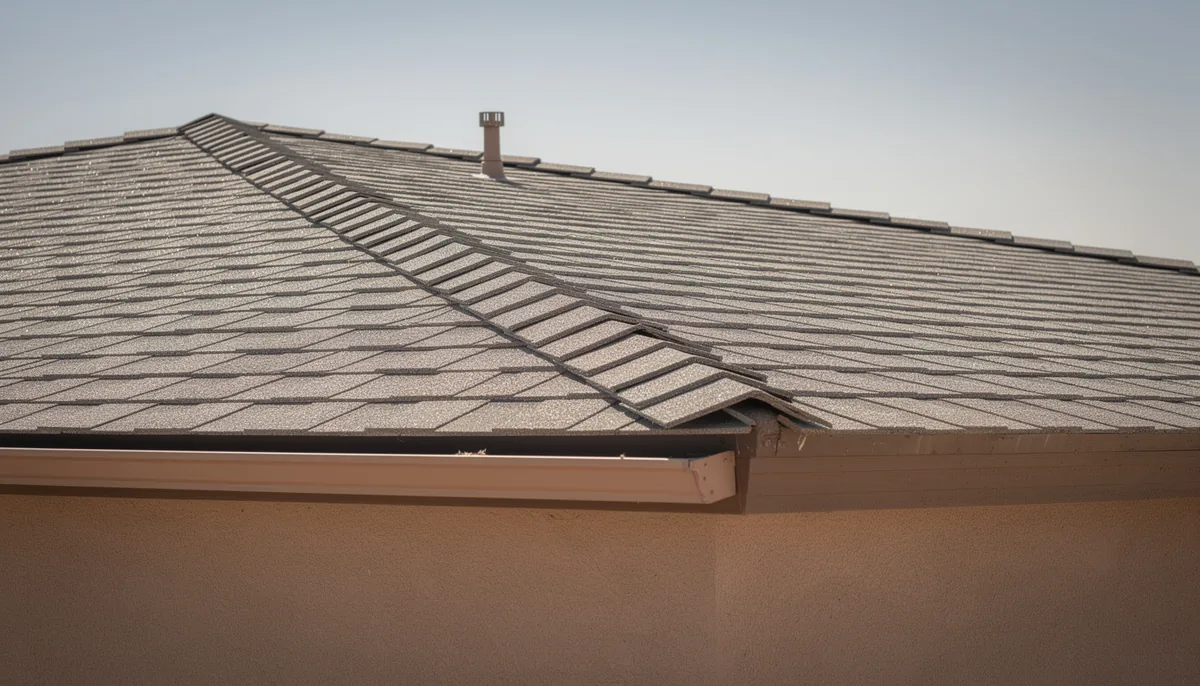
Do cool roofs really work? On a Bakersfield afternoon in July, a reflective roof does its part on the surface every time. How much of that reaches the rooms you live in depends on what sits between the shingles and your ceiling. Price and product labels have their own guide on this site, so this post takes the view from inside the house: what tends to change in the upstairs bedrooms, why ducts in the attic decide so much of the result, how ventilation fits in, and how to choose a color that suits the street and gets through an HOA review.
What Living Under a Cool Roof Feels Like in July
The first place most people notice a cool roof is upstairs, or in whatever room sits under the biggest stretch of south and west roof. A dark roof soaks up afternoon sun and keeps passing heat down into the attic well after sunset, so those rooms tend to stay warm into the evening while the thermostat downstairs reads fine. A reflective surface sends more of that sunlight back, the attic heats up less, and the ceiling over those rooms has less stored heat to give off at night.
In daily life that shows up as small things more than a dramatic drop. The air conditioner may cycle off sooner in the evening. The hallway near the attic hatch may stop feeling like an oven. Researchers at the Lawrence Berkeley National Laboratory Heat Island Group have studied reflective roofs for decades, and the EPA's cool roof guidance describes cooler roof and attic temperatures as the core effect. How far that carries into your rooms is the part worth asking a roofing contractor about, because the answer lives in the attic.
Ducts, Insulation and Why Two Houses Feel Different
Plenty of Valley homes run their ductwork through the attic. On a July afternoon, cooled air leaving the air handler travels through duct sitting in some of the hottest air on the property, and it picks up heat before it reaches a register. When the roof over those ducts runs cooler, the attic runs cooler, and the air coming out of the vents stays closer to what the system made. Houses with attic ducts tend to feel a cool roof the most for that reason.
Insulation works the other way. A deep, even layer on the attic floor already slows heat moving down into the rooms, so a cooler roof changes less below it. A house with ducts inside the living space and a well-insulated attic will usually notice a smaller difference, since less heat was reaching the rooms to begin with.
Leaky ducts are the wild card. A duct that has pulled apart at a joint dumps cooled air into the attic and can draw hot attic air into the return, and no roof surface fixes that. If the goal is a cooler house, it makes sense to have the ducts sealed and the insulation topped up in the same season as the re-roof, so all three improvements pull in one direction.
Ventilation Keeps the Attic Working With the Roof
A cool roof and a ventilated attic attack the same heat from two sides. The roof reflects sunlight before it turns into heat, and the vents carry off whatever heat still builds up. A ridge vent with matching intake at the eaves lets air move through the attic all afternoon. Without the intake, the ridge vent has little to pull from, and the attic holds its heat whatever color sits on top.
Blocked soffits are a common find in older ranch homes where insulation was blown in right up to the eaves. Baffles there keep the insulation from closing off the intake, a small fix next to the roof itself.
Choosing a Color for the Street and the HOA
Color is where living with a cool roof gets personal. Cool-roof lines come in far more than white, with grays, browns and earth tones that read as ordinary from the curb. The trade-off is simple to state: lighter shades reflect more, and darker cool colors give up some reflectance for a look that suits the house. The Cool Roof Rating Council lists the tested values for each color, so you can see what a shade costs you in reflectance before you commit.
Look at real samples outside. A board that reads gray on a kitchen table can look much lighter on a driveway in afternoon sun, and Valley dust will soften any color over the years. If your neighborhood has a homeowners association, its architectural guidelines may name approved roof colors or ask for a sample before work starts. Bring the manufacturer's sample and the product's listing to that review. A board that approved a dark brown years ago may accept a cool-color brown in a close shade, and it is far easier to ask before the shingles are ordered than after.
When a Cool Roof Makes the Most Sense
A cool roof tends to earn its keep on houses with a few things in common: ducts in the attic, insulation that is thin or settled, bedrooms under a big west-facing slope, and owners who plan to spend the coming summers there. If that sounds like your house, a reflective surface is likely to make the rooms easier to live in. If the attic is deep in insulation and the ducts run indoors, the change will be quieter, though the energy code may still steer the product on a re-roof.
For steep roofs, our cool roof shingles page covers the product options. A coating is a different tool. It protects a sound low-slope roof from UV and heat, but it will not fix a roof that already leaks.
Frequently Asked Questions
Will a cool roof make my upstairs rooms cooler?
Often, yes, especially rooms under a large south or west slope. A reflective roof keeps the attic from heating up as much, so the ceiling above those rooms gives off less heat into the evening. The difference is usually larger when ducts run through the attic and smaller when the attic is already well insulated.
Should I seal ducts or add insulation before getting a cool roof?
Doing them in the same season makes sense. Leaky attic ducts pull hot air into the system, and thin insulation lets heat through the ceiling, and a roof surface can't fix either one. Sealing the ducts and topping up insulation while the roof work is planned lets all three changes work toward a cooler house.
Can my HOA reject a cool roof color?
It can if the shade falls outside the association's architectural guidelines, so check before anything is ordered. Many cool-roof lines come in grays and browns close to traditional colors. Bring a sample and the product's rating listing to the review, and leave room in the schedule, since some boards only review requests at set meetings.
Ready to Get Started in Bakersfield?
Bakersfield Roofing Pros serves Bakersfield and the surrounding area. Get a free, no-obligation quote today.