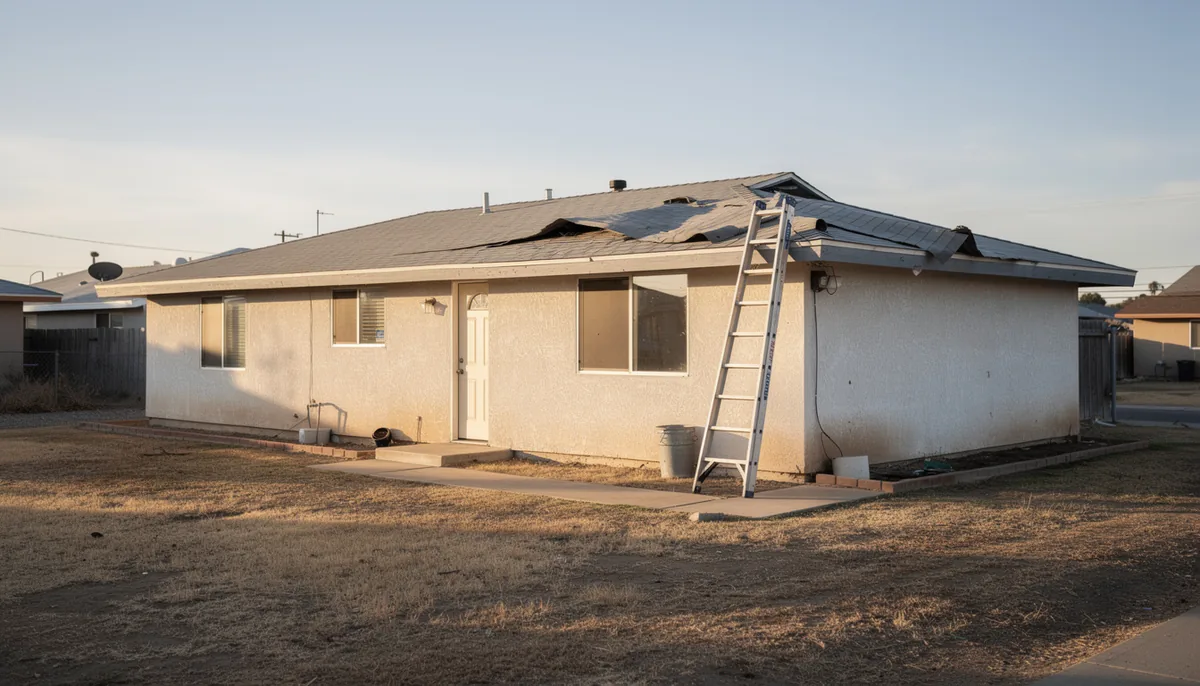
How to spot a bad roofing company is a question many homeowners ask only after something goes wrong. A better time is before anyone climbs a ladder. Bakersfield has plenty of solid roofers, and a windstorm coming over the Grapevine can also bring a wave of door knockers who are hard to find a year later. The warning signs are not hard to read once you know them. Most show up in how a roofer talks about the damage, what goes on paper and how hard they push for a signature. Here is what to watch for, and what to ask, before you hand anyone a deposit.
Signs a Roofer Is Stretching the Truth
The clearest sign is damage you never get to see. A roofer who climbs down and says the whole roof is shot, with no photographs, is asking you to take a large claim on faith. Ask for photos of each problem with something in frame for scale, and ask where the water gets in. Someone who can show you the path of the water is giving you something you can check.
Pressure is the other tell. A price that holds only if you sign today, a storm special, or a suggestion to skip the permit to save money all point the same way. Search for a roofing company in Bakersfield and the list runs long, so favor the names that leave a written scope you can hand to a second roofer, with a number that still makes sense next week.
Paperwork That Leaves Room to Move
Bad roofing jobs often start with a contract that leaves gaps. Watch for blank lines, allowances with no unit price, and words like "as needed" next to decking or flashing. Those are the places a final bill grows. A contract worth signing says what happens when the crew finds something unexpected, with the price per sheet or per foot written down before the old roof comes off.
Payment terms tell you a lot too. California limits how much a home improvement contractor can collect as a down payment, and the Contractors State License Board's guide to hiring a contractor explains the rule in plain terms. A roofer who wants most of the money before materials arrive, or asks for cash with no receipt, is asking you to carry their risk. Payments tied to finished stages of work keep the incentives lined up. Spoken promises, such as a longer workmanship guarantee or free cleanup of the gutters, belong on the contract as well, or they tend to fade.
Look Up the License and Ask About the Permit
Before signing, look up the roofer's license number with the Contractors State License Board. California generally requires a contractor license for roofing work above a small-job threshold, and the lookup shows whether the license is active and which classification it covers.
Then ask who pulls the permit. A roofer who says a re-roof needs no permit, or asks you to pull it yourself as the owner, is shifting risk onto you.
What Not to Tell Your Contractor, and What to Ask
You do not owe a bidder your budget ceiling up front. Ask for a scope and price first, then decide. It also helps not to lead with how badly you need the work done, since urgency is what high-pressure sales feed on. Keep repair and replacement separate in your head as well. A roofer who answers every small leak with a full replacement pitch is worth a second opinion. One failed pipe boot or a lifted flashing is usually the kind of roof repair that Bakersfield's older shingle roofs need, and it should be priced as one.
Good questions are simple. Ask what exactly is failing and whether you can see it. Ask what the price includes if the decking turns out bad. Ask who files the permit. The answers will tell you a lot about how the job would go.
After a Windstorm, Slow Down
Wind events are when a lot of rushed decisions get made. A strong gust can lift shingles across a whole neighborhood, and the knock on the door often follows soon after. Most wind damage here is a slope of lifted or creased shingles, a few slipped ridge tiles or a torn vent cap, and those are repairs. Replacement is the answer when sun-brittle shingles cracked wherever the wind touched them.
If a roofer pushes for a full replacement after a storm, ask to see the photos and ask how much of the roof is damaged. Then get a second look. If water is coming in, a temporary cover over the damaged area buys you time to compare scopes without rushing a large decision.
Frequently Asked Questions
How can you tell if a roofer is lying about damage?
Ask for photographs of each problem with something in frame for scale, and ask the roofer to explain where the water gets in. A written scope you could hand to a second roofer is something you can check. Vague claims that the whole roof is shot, with no photos and pressure to sign today, are reasons to slow down.
How much deposit should a roofer ask for up front?
A small one. California caps the down payment a home improvement contractor can take, and the Contractors State License Board's hiring guide spells out the limit. After that, payments should follow finished stages of work. A roofer pushing for most of the price before anything happens on your roof is a reason to slow down.
Should a roofer ask me to pull the permit myself?
Treat that as a warning sign. The roofer doing the work normally files the permit with the City of Bakersfield or Kern County, depending on your address. An owner-pulled permit can leave you responsible for the code and inspection side of a job you did not perform, which is risk you never agreed to carry.
Ready to Get Started in Bakersfield?
Bakersfield Roofing Pros serves Bakersfield and the surrounding area. Get a free, no-obligation quote today.