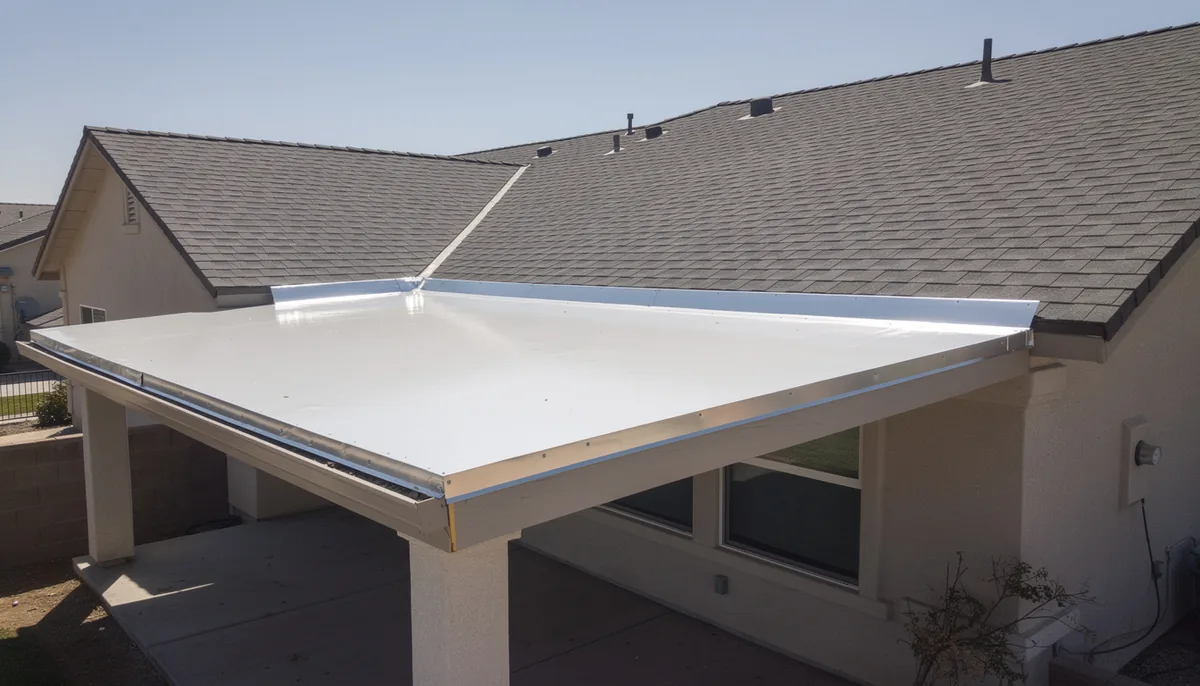
Is a 1/12 roof pitch OK? For the right roofing system, yes. A 1/12 pitch means the roof rises one inch for every twelve inches it runs, which is close to flat, and it is common on Bakersfield patio covers, garage roofs, room additions and some whole houses. The trouble starts when that shallow slope gets covered with a product built for steeper roofs. Water moves slowly on a near-flat surface, and anything that relies on gravity to shed it will struggle. This guide covers which materials belong on a low slope, why shingles don't, and what Valley sun and seasonal rain do to these roofs over time.
What Counts as a Low-Slope Roof
Roof pitch is written as rise over a run of twelve. Steeper roofs, like the ones over most living spaces in town, shed water fast enough for overlapping shingles or tile. Asphalt shingles rely on gravity to carry water over each course, and on a shallow roof water can back up under the tabs. That is why shingle makers publish a minimum slope. Typical manufacturer instructions allow asphalt shingles down to 2 in 12 with special low-slope underlayment and treat 4 in 12 and steeper as a standard installation, and the Asphalt Roofing Manufacturers Association publishes guidance along the same lines. The exact figures vary by product, so the instructions for the shingle being quoted are the ones that count. A 1/12 section sits below all of them and needs a different system altogether.
It is worth asking Bakersfield roofers about low slopes, because many older ranch homes around town pair a shingled main roof with a patio cover or carport at a much shallower pitch.
Which Roofing Systems Belong on a 1/12 Pitch
A low slope needs a continuous waterproof surface rather than overlapping pieces. Single-ply membranes, modified bitumen and built-up roofs are the usual options, and each is installed with sealed seams so water can sit briefly without finding a way in. SPRI, the trade association for single-ply roofing, publishes design standards for membrane systems if you want to read deeper.
Under Central Valley sun, dark built-up and modified-bitumen roofs tend to age faster than a light single-ply membrane, because they take the full heat of the afternoon. A reflective coating over a sound membrane can stretch its life and keep the surface cooler, and our flat roof coating page covers that work.
How Valley Sun and Seasonal Rain Wear Down a Low Slope
Summer is when the damage happens, and the rainy season is when you find out. Bakersfield gets most of its rain in the cooler months, and a normal July brings none at all. Seams and flashings split under months of UV and heat, sit dry all summer, and leak with the first real storm. The National Weather Service climate records for the San Joaquin Valley show how lopsided that pattern is.
Ponding is the other enemy. Water that sits for days after a storm points to a low spot, a clogged scupper or a sagging deck, and it shortens the life of any membrane. Drainage comes before coatings. A dry-season roof walk is the time to find split seams and low spots, while the surface is dry enough for repairs and coatings to cure.
When a Low Slope Is Part of a Larger Roof
Plenty of houses mix the two: a steep main roof in shingle or tile, with a shallow patio cover or addition tied into it. The tie-in is where leaks like to start, because two systems meet and the flashing has to bridge them. When the main roof is due, it is worth planning the low-slope section at the same time so the transition gets rebuilt as one detail rather than patched from both sides. Our roof replacement page covers the steep-slope side of that work.
If someone offers to shingle a 1/12 patio cover to match the house, ask which manufacturer allows its shingle at that pitch. Typical instructions stop at 2 in 12 even with special underlayment, so the better answer is a membrane or coated surface in a color that sits well next to the main roof.
Signs a Low-Slope Roof Needs Attention
Low-slope trouble tends to show up from below before anyone looks at the roof. Water stains on a patio cover ceiling, sagging between rafters, or a stain where an addition meets the main house all point upward. On the roof, look for blisters or cracks in the surface, seams lifting at the edges, and dark patches where water stood after the last rain. A membrane that feels soft can mean wet insulation underneath, and that has to be found and dried or replaced before any coating goes on.
Catching these during the dry months matters here, because the repair window stays open from spring through fall and narrows once the storms return. A small seam repair before the rain tends to cost far less than a ceiling repair after it.
Frequently Asked Questions
Is a 1/12 roof pitch OK?
Yes, for a membrane or coated low-slope system, which is built to handle water that moves slowly. It is not OK for asphalt shingles or tile, which rely on gravity to shed water and need a steeper roof. On a Bakersfield patio cover or addition at 1/12, a single-ply membrane or a coated surface is the usual choice.
What is the minimum pitch for asphalt shingles?
Typical manufacturer instructions allow asphalt shingles down to 2 in 12 when a special low-slope underlayment goes down first, and treat 4 in 12 and steeper as a standard installation. The exact figures vary by product, so check the instructions for the shingle being quoted. Below 2 in 12, a membrane or coated surface is the better system.
How long does a flat roof last in Bakersfield?
It varies with the system and the care it gets. Light single-ply membranes generally hold up better here than dark built-up or modified-bitumen roofs, which take the full Valley sun. A reflective coating renewed on schedule can stretch a sound roof further, and ponding water shortens the life of every one of them.
Ready to Get Started in Bakersfield?
Bakersfield Roofing Pros serves Bakersfield and the surrounding area. Get a free, no-obligation quote today.